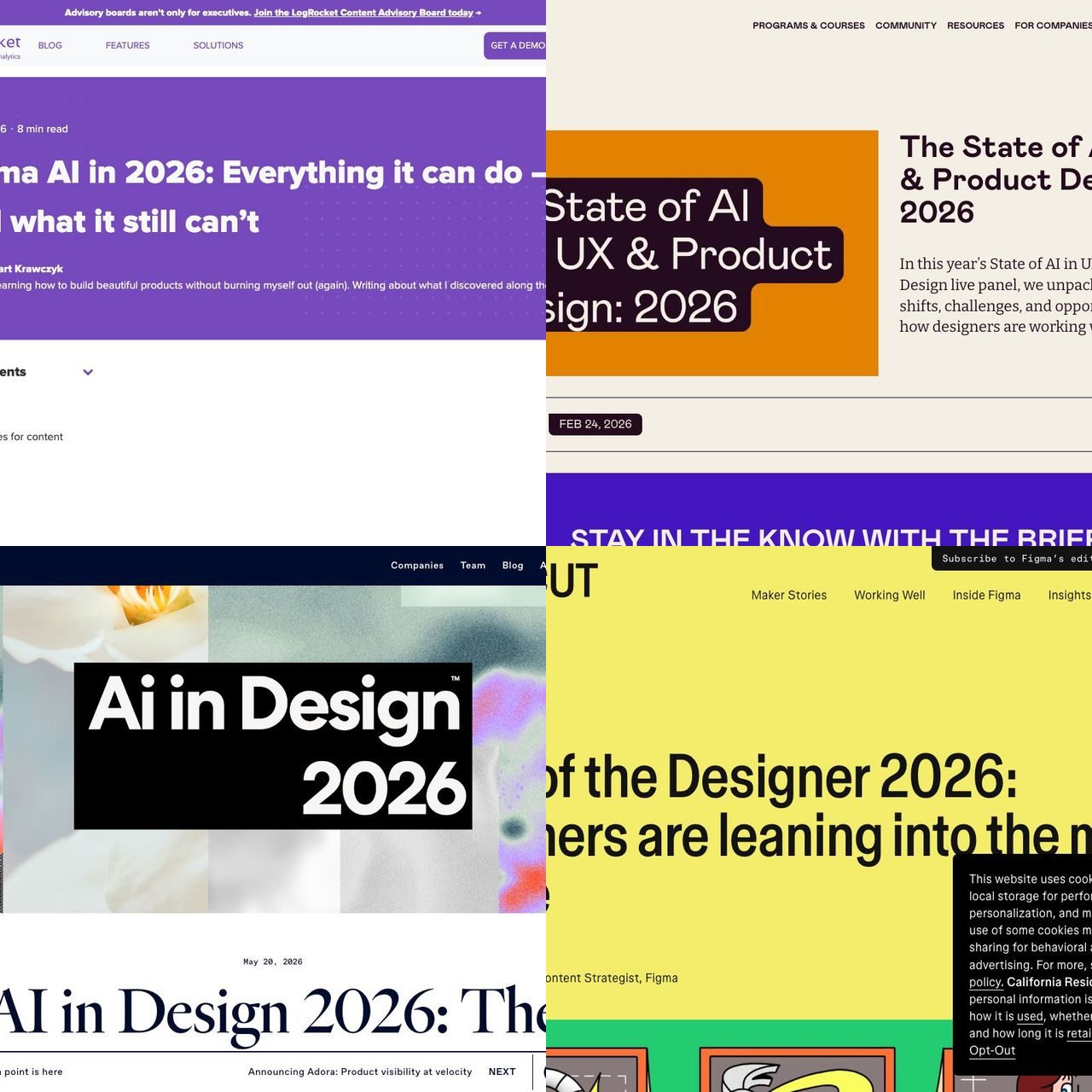
Every AI design tool now opens its pitch the same way. You type a sentence. Figma Make, V0, Galileo, Framer AI. Thirty seconds later a screen appears, fully laid out, components placed, copy filled in. The room makes the sound the demo was engineered to produce. The implication is that the job is now done by the prompt.
The lens I want to use here is one of Irvan's: taste compounds, tools commoditize. The demo commoditizes the wrong thing. One-shot generation is the smallest, cheapest slice of design work. The demo is a magic trick. It works by hiding everything that surrounds the trick.
Start with what happens after the first shot. The clean first output is the part the tool is best at, because it is the part with the least context. The moment you push past it, the trick degrades. A real user on Figma's community forum put it plainly: "I've created a Figma Make file which has over 900 prompts BUT the context is now too broad and it starts to hallucinate a lot and not follow the prompt correctly." Another said the prompt limit "has put me in a blocked position for the coming 2 weeks." Day-to-day design is iteration twelve, not iteration one. The demo always stops at one.
Then there is the design system. The thing that makes a screen yours and not a template is fidelity to a system that already exists: your tokens, your components, your spacing rules, the accessibility you already fought for. LogRocket's read on Figma AI is direct: "you won't be able to base the output on your own design system," and "you might have trouble with uncommon design patterns." The demo screen looks finished precisely because it owes nothing to a real system. It is generic, and generic is fast. Specific is slow, and specific is the job.
Then there is production. The demo never opens the inspector. LogRocket again: the output "is neither accessible, semantic, or clean," and "most outputs still need human review for accessibility, semantics, and production readiness." A mockup that reads as finished and a build that ships to real people are separated by exactly the work the demo refuses to show. That work is most of the work.
And all of that is still downstream. The largest omission sits before anyone touches the tool. Nobody in the demo decided what to build. No research happened. No problem was framed. No tradeoff was made about which user, which job, which thing to cut. Designlab names the gap: "AI can produce layouts, copy, and flows in seconds. But understanding the product and knowing which output works and why requires context, discernment, and craft." The tool produces the output. It does not produce the reason the output should exist. That reason is the design.
This is why the speed in the demo is a category error about value. Designlab says it cleanly: "Speed will stop being impressive. Everyone is going to be fast." When the floor of execution rises for everyone, fast stops being a differentiator. What is left is judgment, and judgment compounds in the opposite direction from tools. Designer Fund's survey found only 5% of leaders are placing less emphasis on execution quality, and that "taste, judgment, and the ability to uphold a high standard matter even more now." The tool got cheaper. The taste got more expensive.
I do not think the tools are bad. Figma's own research says 91% of designers report AI improves their work, and I believe it. I use these tools. The lie is not in the tool. The lie is in the demo, which crops the frame to the one move the tool performs well and presents it as the whole game. The whole game is research, framing, deciding what not to build, holding a system together across hundreds of states, and getting it to production for a real person who has never heard of the prompt that started it.
A tool whose half-life is three years cannot give you any of that. Taste has a half-life measured in decades, and it is the only part of this that accrues.
So here is the stake. If a tool ever ships a demo that shows the messy middle (iteration forty, the design-system reconciliation, the accessibility pass, the argument about which user loses), that is the day I worry. Until then the demos are selling you the easiest thirty seconds of a job that takes weeks. Which part of your work would survive being shown in a thirty-second clip?





.webp)
.webp)
.webp)

